Thứ Tư, 9 tháng 12, 2015

noodle dishes in Hanoi


You could easily eat noodle dishes in hanoi vietnam for breakfast, lunch and dinner for a week and still not have the same meal twice. Here’s our quick guide to what’s what when it comes to noodles in the Vietnamese capital.


Make sure you get a good grip.

Let’s start with the most well-known: pho. As we highlighted some time ago, pho is not just a famous soup-based dish but refers to a flat rice noodle. For pho, pho xao mem and other stir-fried dishes it’s cut into strips about three millimetres wide, while for pho cuon it’s cut into rectangles and wrapped around yummy fried beef and fresh greens. Head to the Truc Bach area for a good selection of pho-based dishes or try one of the many different varieties of pho (noodle soup) that can be found around the city — Pho 10 Ly Quoc Suis a good place to start as the different types of pho bo (beef) are clearly listed.

Crispy pho chien phong.

Bun is another rice noodle but it’s round, more like thin spaghetti, and is either served on the side with a dipping sauce (as in bun cha and bun dau), in a soup (bun ca for example) or somewhere in between, such as in bun bo nam bo which combines noodles with beef, herbs, peanuts and a smidgen of light broth. temple of literature, nguyen thai hoc street is a good place to try delicious bun bo nam bo or try Noodle and Roll for a more tourist friendly environment.

My (pronounced mi) is egg noodle. Commonly found in small dried blocks, packaged in polyurethane with a small sachet of dried vegetables and flavouring, and sold for a few thousand VND from grocery stores, myis the ubiquitous instant noodle. It’s commonly eaten for breakfast in Vietnamese homes — or out of home when it comes in a plastic bowl — and while not particularly nutritious is a cheap belly filler. It’s also popularly sold as my xao at streetside restaurants, when it’s hydrated and fried up with beef, greens, flavouring and whatever other veg the restaurant decides to throw in. It’s also available fresh, but the dried version is more common.

They’re not noodles on top, they’re carrots.

If you’ve had quite enough rice, in any form, and have an egg — or instant noodle — allergy, then how aboutmien? In vietnam, mien is commonly made from canna or mung bean starch, although it also comes in a number of other starchy varieties, such as arrowroot and potato. It’s referred to by a number of English names, including glass noodles, cellophane noodle and vermicelli.

Mien is less commonly seen around the touristy areas of town but it’s there if you look for it. Two dishes worth trying are mien ngan with poultry and mien luon with eel. A good place for the latter is Dong Thinh Nha Hang Mien Luon on Hang Dieu. Mien is also used in salads, spring rolls and soup — try the vermicelli salad at Com Pho Co. It’s quite a chewy noodle but a tasty alternative.

Even if you don’t want to taste mien, it’s interesting to see it made: take a trip out to Cu Da (Vermicelli) village, on the outskirts of Hanoi to do this.

You might not want to eat them once you’ve seen them made.

Finally, banh da deserves a mention. A dark coloured, wheaty, flat noodle, banh da is often found as an alternative at places serving bun cha or bun rieu cua, such as at number 15 Ngo Tran Tien. Yum.

About Nha Trang

Nha Trang not only gets great natural advantages of its geography position, landscape, and climate, but inherits its rich background in culture and humanities as well. It is one of the most beautiful beaches in vietnam 

Khanh Hoa is a coastal province in South Central Viet Nam. The terrain of this region gradually declines from the mountains to the west towards the hills, deltas, and a 200km- long coastline and islands to the east. It is well known by the attractive beauty of its own capital – Nha Trang. Among its 3 bays, Nha Trang ranks first thanks to 100% pristinebeaches, excellent view, gorgeous islands, mountains, and rivers.
Nha Trang not only gets great natural advantages of its geography position, landscape, and climate, but inherits its rich background in culture and humanities as well. Although it is 1,280 km far away from Hanoi and 448 km from Ho Chi Minh city, it is easily accessible for tourists by all means of transport: by road, rail, air and waterway.

History

Until the middle of the 19th century, Nha Trang had still been a deserted area with wildlife animals like tigers, and was a part of Hà Bạc, Vinh Xuong District, Diên Khánh Province. Nha Trang officially became a center urbain under the Indochina Governor General’s decision issued on the 30th August 1924. After only 2 decades of early 20nd century, Nha Trang underwent rapid changes and became today’s Nha Trang city – a marvellous picture with old view but modern and fresh environmental city of Khanh Hoa.
The name of the city – “Nha Trang” – derives from a false Vietnamese spelling of a geographical name in the Cham language of the site Ya Trang, (which litterrally means Lau River, the name of the now Cai River as referred to by the Cham people). From this, the name was adopted to call what is now Nha Trang.
Natural conditions
Nha Trang is known as a sea city with a great long beach and a lot of islands, making the city different and outstanding from any other cities of Vietnam travel. With 19 islands, Nha Trang is famous with beautiful view and different species living inside (such as the Monkey Island). People also live there, specifically around 2,500 households and 15,000 persons. The biggest island is Hon Tre with 36 square kilometer, being laid far far away in the distant sea, bringing Nha Trang Baythe impression of being out-of-the-wind, “all calm and still”.
Cultural values
Nha Trang is famous for natural beauty, therefore, most great Beauty Contests of Vietnam and some of the World have selected this city to be the performance place. Nha Trang people are now very proud to witness the greatest Beauty Contest of both Vietnam and the World to take place here. For the past years, Miss Vietnam and Miss Earth have occurred in Nha Trang. More importantly and proudly for Nha Trang in particular and Vietnam in general, Nha Trang (to be exact, Vinpearl Land (which means Vietnam’s Pearl) – the 5-star resort of the city) was selected for the “Miss Universe Pageant 2008”.
Another cultural activity is sea festival. Sea Festival is held anually, and August-Nha Trang Rendezvous Festival is held every 2 years absorb numerous tourists. All the festivals fully cover sea food, arts and activities like Sea-Food Zone, Sea Night Carnaval, ect., and some exhibitions about Cham Brocade Textile, Arranging Art, and so on. If you would like to get to know about this City, please come and join them on any of those occasions.
Cuisine
The culinary offer in Nha Trang is very varied, which are the reasons tourists enjoy their stay in Nha Trang. One of Nha Trang’s most valuable specialities is “yen sao” (translated as “salangane”), “nhím biển” (translated “sea-chesnut”), “cầu gai”…, which make this sea city special. A salangane is not a swift or swallow. It builds its nest with its saliva. The salangane was associated with royal banquets in the past, and with expensive formal parties today. In the past, salangane was an “ideal precious age prolongging medicine” for Kings.
Apart from Seafood, Nha Trang has many other delicious special delicacies, such as Ninh Hoa dried Spring Rolls (Nem nướng Ninh Hoà), Fish noodle (Bún cá), Canh cakes (Bánh Canh), etc., containing the characteristics of the land. Some scholar once said: “Special food or delicacies reveal their genuin land in the most lively way”

Thứ Hai, 7 tháng 12, 2015

But cave in Ninh Binh, Vietnam

Ninh Binh is emerging as one of the most exciting destinations during your Vietnamtour. It is endowed with wonderful landscapes such as Tam Co, Trang An, Van Trinh cave,…But cave ( Buddha Cave) has recently discovered and considered as one of the most beautiful caves in vietnam. 
But cave
But cave
>>> Explore vietnam places to visit  with Rough Guides: find out when to go, view itineraries and read about lakes, bays, street food and water puppets.
Located in the heart of Tuong Mountain, about 18km from Ninh Binh city, But cave is in Dong Lam hamlet, Son Ha commune, Nho Quan district, Ninh Binh province. But cave owns the length of 500 meters, with its numerous alluring stalactites hanging down with their diversified shapes. There is a stalactite with the height of 1.5m and the width of 2m looked like a Buddha appearing in fanciful scenery. Visiting But cave, tourists have opportunities to admire wild nature, mysterious jungle and listen the whistling wind.
After coming to the entrance of the cave, tourists may feel like they had just disappeared from the real world to get lost in such a hidden fairy site due to sparking stalactites with different shapes. The deeper you go inside, the more fanciful scenery is, which stimulate tourists to be curious about mystery of the cave. Don’t forget to take some photos to mark this memorable experience.
Besides, But cave gives tourists a chance to immerge in daily activities of villagers. You can drive bicycle through the bamboo lined path and learn about traditional culture of the wet rice cultivation. Or even, you can try being a shepherd tending buffalo, fishing, catching crabs, pounding rice or enjoying rustic foods cooked by yourself such as grilled anabas, crab soup,…
See more: Great savings on hotels in da lat vietnam online. Good availability and great rates. Read hotel reviews and choose the best hotel deal for your stay.

Thứ Năm, 3 tháng 12, 2015

Travel Tips: How to Spend One Day in Hanoi, Vietnam


Ho Chi Minh mausoleum, Hanoi

A comprehensive list of what to do in hanoi, Vietnam. Includes all the major sights and activities in and around Hanoi. One day in Hanoi isn’t nearly enough, but with nearby attractions like the Perfume Pagoda, the Red River Delta and the UNESCO-listed Halong Bay to explore, and many visitors heading south to Hoi An or Ho Chi Minh City, the vibrant capital is often relegated to a day tour. Teeming with historic sites, colonial architecture and glitzy shopping malls, the capital can be overwhelming for first time visitors and while it’s cheap and easy to get around on your own, booking a sightseeing tour of Hanoi will save time and take the hassle out of your trip.

Make an early start and head straight for Hanoi’s top attractions, like the Temple of Literature, a magnificent complex built in 1070 by Emperor Ly Thanh Tong on the site of Vietnam’s first university and renowned as a prime example of traditional Vietnamese architecture. From here, walk north past the Museum of Fine Arts, temple of literature, Ngoc Ha village and the One-Pillar Pagoda (Chua Mot Cot) to the Ho Chi Minh Complex, where you can view the body of the much-revered former president at the Ho Chi Minh mausoleum. Also on site is his former stilt house, the grand Presidential Palace and the Ho Chi Minh Museum, where you can learn about his role as a revolutionary leader.

Just north of the Ho Chi Minh Complex, Hanoi’s West Lake offers an idyllic backdrop for lunch and the most atmospheric place to eat is at one of the floating restaurants. Pay a visit to the lakeside Quan Thanh Temple, the city’s oldest temple, and the Tran Quoc Pagoda before spending the afternoon exploring Hanoi’s Old Quarter. A traditional Cyclo tour is a fun way to get around the Old Quarter, but it’s also possible to take in the highlights on foot, strolling along the shores of Hoan Kiem Lake, visiting Ngoc Son Temple or browsing the exhibitions at the fascinating Museum of History.

As the sun begins to set, make a beeline for the famous Dong Xuan Market, which comes alive in the evening hours. As well as shopping for clothing, handicrafts and unique souvenirs, this is one of the best places in the city to sample Vietnam’s legendary street food, so be sure to visit with an empty stomach. Finish off your day with another quintessential Hanoi experience – watching a water puppet show at the historic Thang Long Water Puppet Theatre or Bong Sen Theatre.

See more:  How to spend one day in sapa, vietnam

Thứ Tư, 2 tháng 12, 2015

Cheap boutique hotels in Hanoi, Vietnam voted by Theguardian.com


Busy street and traffic chaos are one of attractions of Hanoi tourism, but this is a suitable condition to choose reasonable price.

1. Guest House Y Lan

Address: 29 Hai Ba Trung street, Trang Tien ward, Hoan Kiem district, hanoi vietnam

It can be said that guest house Y Lan is one of realest guest houses in Vietnam. Mrs Oanh, owner of the guest house is able to speak French and a little English, will supply breakfast on marble countertops.

Room price is from USD 30 onwards

2. Hotel Maison D’ Orient


Address: 26 Ngo Huyen, Hang Trong ward, Hoan Kiem district, Hanoi, vietnam

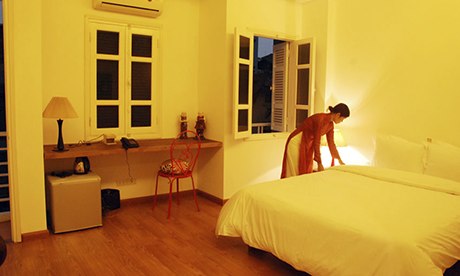
The hotel is located in the Old Quarter with handcrafted interior with a very nice style. It includes 12 rooms and named after spices (ginger, cinnamon, anise), interior made of bamboo, etc.

Room price is from USD 25 onwards

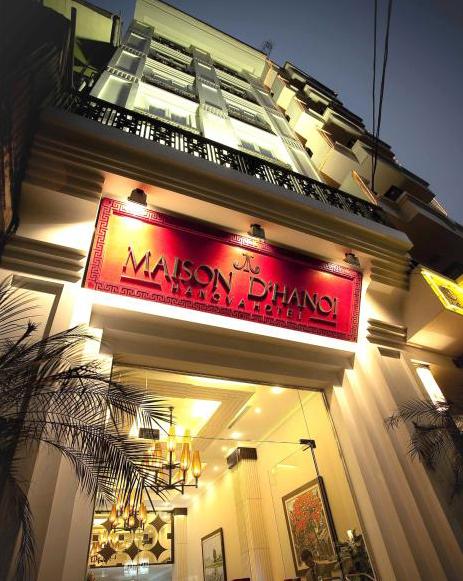
3. Hotel Maison d’ Hanoi Hanova


Address: 35-37 Hang Trong street, Hoan Kiem district, Hanoi

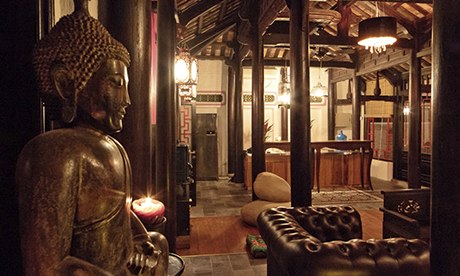
It is a combination of luxury Indochine style and modern space. Maison d’ Hanoi Hanova is a perfect place for shopping lovers.

4. Homestay Maison Hai Ly


Address: number 8, 437 Ngoc Thuy street, Long Bien district, Hanoi, Vietnam

It is about 15 minutes from the Old Quarter; Homestay Maison Hai Ly is designed with ceramic tiles. With the combination of an open living room and kitchen facing private garden, the winter will be very cozy with wood burning fireplace. The summer will pick up natural light from the garden surrounded with walls. Breakfast is provided with herbs and seasonal vegetables from a nearby garden, very Vietnam meals.

The price costs USD 90 per night for two persons (added USD 15/person for one more person), breakfast included.

See more: Top vietnam things to do, plus suggested routes. Travel tips and advice for backpackers and independent travelers.

Thứ Ba, 1 tháng 12, 2015

Bun Cha is Specialties of Hanoi Old Quarter


Each part in the territory of Vietnam has its unique cuisine and its own appeal. Hanoi is also not excepted. They are not luxurious cuisines but bring appetite appeal to Hanoi people and make diners from all parts of the country addicted. It is the flavor of homeland!

Bun Cha (Grilled Pork Balls with Vermicelli)

Bun Cha is a food of the northern part of Vietnam, but most popular in Hanoi. Such this food is familiar to noodles with grilled pork meat in the central and southern Vietnam, but the dipping sauce is described with gentle taste which caused nostalgia for Hanoi people who are far away from their hometown.


Hanoi bun cha- the further you go the more you miss.

Bun cha has two types: pork balls and pork pieces. They are grilled on coat fire. Grilled pork meat is served with vermicelli and raw vegetable. The dish is served in two bowls: one for vermicelli and the other for dipping sauce together with grilled pork balls, green carrot, papaya, etc.


Fragrant grilled pork balls

To enjoy the dish Hanoi bun cha, tourists could visit bun cha booths at Dac Kim, Hang Manh street; Duy Diem bun cha, Sinh Tu bun cha, etc.

Thứ Hai, 30 tháng 11, 2015

Xuan Son National Park

Xuân Sơn is the only National Park in Vietnam boasting primitive forests in the limestone mountains, which are home to a diversified composition of flora and fauna with a wide range of wild rare and valuable animal and natural caves and waterfalls. If you love to explore nature, Xuan Son National Park is a definite destination for you.
Other: the hanoi opera house was erected by the French
Other :Here's all you need to know for visit hanoi

A panorama of the Park
Located in Tan Son District, Phu Tho Province and approximately 120km from Hanoi, the Park spreads on an entire area of 15,048ha, ranked as 12th largest national park and has 80% of its territories covered by forests. It is regarded as the green lung of the northwest region as well as a significant economic source to the aborigines residing in the neighborhood.
xuan-son-park
Accommodation of ethnic groups in Xuan Son National Park
Coming to the park in one day, you will experience the four-season weather in the order: spring, summer, autumn and winter for the morning, noon, afternoon and night respectively. The average temperature is 22-23 degrees Celsius throughout the year.
xuan-son-park
Up to now, there have been 365 animal species and 726 species of vascular plants discovered and recorded in Xuan Son. 46 endangered animal species are listed in Vietnam’s Red Book and 18 others in the World Red Book. The park is the habitat of pheasant, leopards, squirrels, civets, gibbons, etc… Xuan Son’s vegetation is dominated by magnolias, oaks and chestnut trees in the intersectant region between China’s Huanan regions and Indo-Malaysia.
xuan-son-park
Many rare and valuable animal species are recorded in the Park
Xuan Son can be an ideal site for ones who are into trekking as limestone karst occupies an area of 1,661ha, equivalent to 30% of the Park’s total area. Some outstanding mountains are Mount Voi, Mount Ten, Mount Can,…with the height of 1,000 meter-plus. Additionally, the limestone karst contains an innumerable amount of weather-beaten caves, some of which contain complex systems of rivers and numerous small holes acting as cool ventilation to the interior of those caves.
xuan-son-park

Ethnic groups can be found residing in the Park and possess and maintain their unique culture theme expressed through costumes, cuisines, dances, handicrafts and festival.
Xuan-son-park
Nine-spur cock – a specialty meat in ethnic cuisine
An area of 9,099 ha of Xuan Son National Park is under severe authority protection since shifting cultivation and forest fire are posing substantial threats to the habitat of animals as well as plants in the park. Another issue is that the park possesses inadequate land volume to support a viable population of bird species and mammal in the future.